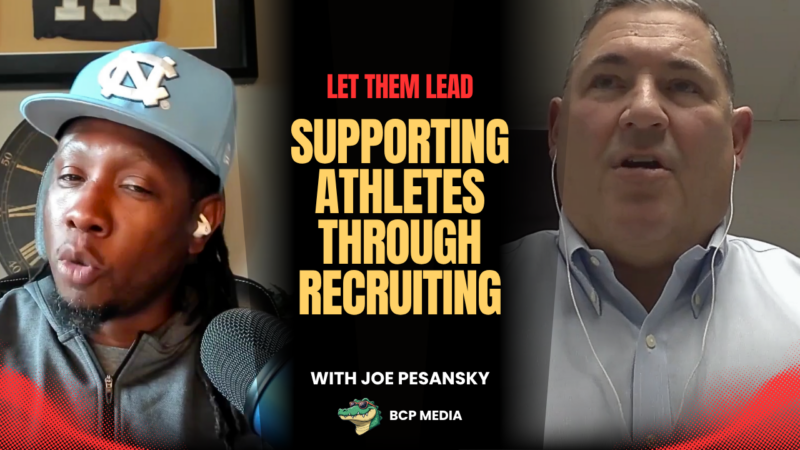
The Next Conversation | Preston Jackson with Joe Pesansky
What happens when a talented athlete does everything right but the recruiting opportunities never come? What happens when the school everyone expects your child to choose isn’t the school they actually want? And how do parents know when to push, when to step back, and when to simply trust the process?
For Joe Pesansky, these aren’t hypothetical questions. He’s experienced them firsthand while navigating the college athletic journeys of his four children, including two Division I football players and a daughter who earned a rowing scholarship to Alabama.
His family’s journey offers a behind-the-scenes look at college recruiting, athlete development, family sacrifice, and the decisions that can shape a young athlete’s future.
“Every kid’s journey is different. What my kids went through may be completely different from what another family experiences.”
One of the biggest lessons Joe learned is that talent doesn’t always translate into recruiting opportunities. His oldest son, Joe, arrived at Jesuit High School in Tampa with tremendous potential, eventually breaking school records and putting together an outstanding senior season. But his recruiting journey didn’t follow the traditional path.
The family admits they missed some important early opportunities, including recruiting camps, exposure events, and platforms that could have helped build his profile. Then COVID disrupted the recruiting landscape even further.
Despite impressive statistics and measurable ability, scholarship opportunities were limited. Some major programs offered walk-on opportunities, but Joe was determined to earn a scholarship.
Eventually, Sacred Heart and Holy Cross entered the picture. Holy Cross head coach Bob Chesney made a strong impression by investing time in understanding the entire family, not just the quarterback. Even without an in-person campus visit because of COVID, the relationship developed enough trust for the family to make a decision.
But recruiting exposure is only part of the equation. What happens once college coaches actually start evaluating a prospect?
“They looked at every snap Peter’s ever played.”
That revelation should get every high school athlete’s attention.
When Peter was being recruited, coaches weren’t simply watching highlight films or evaluating tackles, sacks, and statistics. They were examining everything. How did he start a play? Did he finish? How did he react when things didn’t go his way? Did he maintain his effort when the football wasn’t coming toward him?
Peter’s motor became one of his biggest selling points. Coaches consistently recognized his ability to play through the whistle and give maximum effort.
His recruitment eventually came down to North Carolina and Oklahoma. Despite Oklahoma’s reputation and impressive football pedigree, Peter trusted his instincts and chose UNC because it felt like home.
That decision highlights another important recruiting lesson: relationships, culture, and fit can matter just as much as a school’s name.
“You have to go to a coach you want to run through a wall for.”
And getting recruited is only the beginning.
Joe explains that families sometimes underestimate what happens after an athlete commits. Maintaining relationships with coaches, staying physically prepared, and continuing to develop are critical. Some athletes choose to enroll early, while others prioritize finishing their senior year, playing other sports, and enjoying their high school experience.
Peter chose to finish his senior year, continue playing lacrosse, attend prom, and maintain his training program. He understood that the time between committing and arriving on campus still mattered.
College football is another level of competition. Athletes must develop their bodies, understand the system, perform academically, and earn their opportunities. A scholarship doesn’t guarantee playing time.
But perhaps the most important part of this conversation has nothing to do with football.
“You cannot care more than your kid.”
Joe’s parenting philosophy centers on supporting his children’s ambitions without taking ownership of them. He believes parents should provide information, create opportunities, ask thoughtful questions, and allow their children to make their own decisions.
That means resisting the temptation to push a prestigious university simply because of its football brand. It means trusting coaches to make playing-time decisions. And it means understanding that each child has different motivations, interests, and definitions of success.
For families navigating college athletic recruiting, Joe’s experience offers a valuable reminder: prepare your athlete, advocate for them, and support their development. But don’t lose sight of the person behind the prospect.
Three college athletic journeys have taught Joe plenty. His biggest lesson might be the simplest: Your job is to help open doors. Your child’s job is to decide which one to walk through.
Watch or listen to the full conversation on The Next Conversation with Preston Jackson and Joe Pesansky.