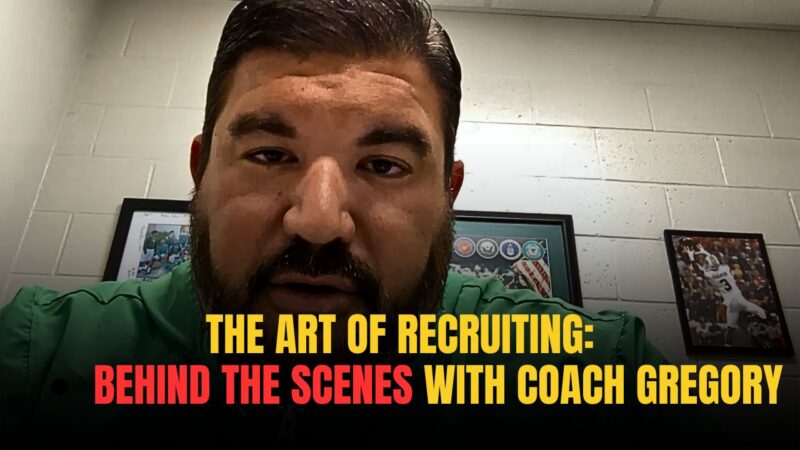
Coach Mike Gregory has seen high school football from nearly every angle. After years as an assistant coach, he stepped into the head coaching role at Tampa Catholic and quickly learned that leading a program requires much more than calling plays on Friday nights. In this conversation, Gregory shares valuable lessons about leadership, player development, recruiting, and the changing landscape of college football.
His experience offers practical advice for coaches, parents, and student-athletes who want to better understand what it takes to build a successful football program.
From Assistant Coach to Head Coach
One of the biggest adjustments Gregory discusses is the shift from focusing on a specific position group to overseeing an entire football program. As an assistant coach, attention stays on player development and game preparation. As a head coach, every detail becomes your responsibility.
That includes scheduling, communication with parents, coordinating assistant coaches, academic accountability, and maintaining the overall culture of the program. Gregory explains that strong leadership is built on organization, trust, and consistency long before kickoff.
Understanding the College Recruiting Process
Recruiting remains one of the biggest topics for families, and Gregory provides an honest look at how colleges evaluate prospects.
While highlight videos may grab attention, coaches are looking much deeper. They evaluate consistency, effort, athletic ability, academics, character, and how a player fits within their system.
One of Gregory’s biggest takeaways is that communication matters.
“Communication with high school coaches is crucial.”
College recruiters often rely on high school coaches to verify a player’s work ethic, leadership, and coachability. Those relationships can play a significant role in helping athletes earn opportunities.
How NIL and the Transfer Portal Changed Recruiting
The recruiting landscape has shifted dramatically with the introduction of Name, Image, and Likeness (NIL) opportunities and the transfer portal.
Gregory explains that many colleges now prioritize experienced transfer players before recruiting incoming high school athletes. This creates additional competition for high school prospects and makes player development even more important.
Rather than becoming discouraged, Gregory encourages athletes to focus on what they can control.
Develop physically. Improve football IQ. Build strong relationships with coaches. Continue performing in the classroom.
Those habits still separate athletes regardless of changes in recruiting.
Building a Winning Culture
Talent alone does not build successful football programs.
Gregory discusses the importance of leadership, accountability, and creating an environment where players compete for each other instead of individual recognition.
Spring football provides an opportunity to evaluate young players, establish expectations, and build chemistry before the regular season begins.
When players understand their roles and embrace the team’s culture, programs become more consistent year after year.
Memorable Players and Defining Moments
Reflecting on his coaching career, Gregory highlights several standout athletes who made lasting impressions.
He describes Christian Green as “the best playmaker I’ve seen at TC,” while calling Nate Craig one of the most clutch receivers he has coached. Their performances showcased the value of preparation, confidence, and performing under pressure.
Gregory also shares stories about difficult in-game decisions, illustrating that successful coaching often comes down to preparation and trusting the people around you.
Final Takeaway
Coach Mike Gregory’s journey demonstrates that successful football programs are built through leadership, communication, player development, and strong relationships.
Whether you’re a coach managing a roster, a parent navigating the recruiting process, or a player chasing the next level, the principles remain the same. Develop your skills, build trust, communicate well, and stay committed to continuous improvement. Those fundamentals continue to open doors both on and off the football field.